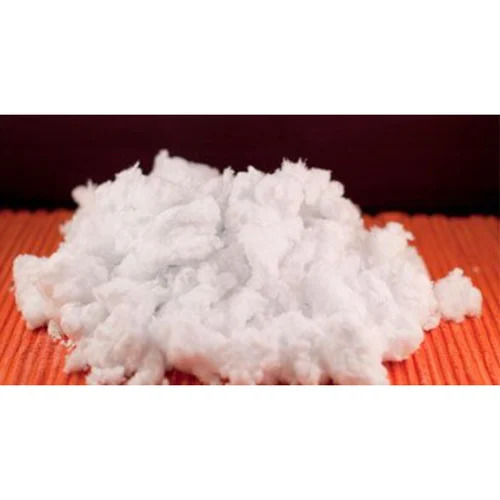
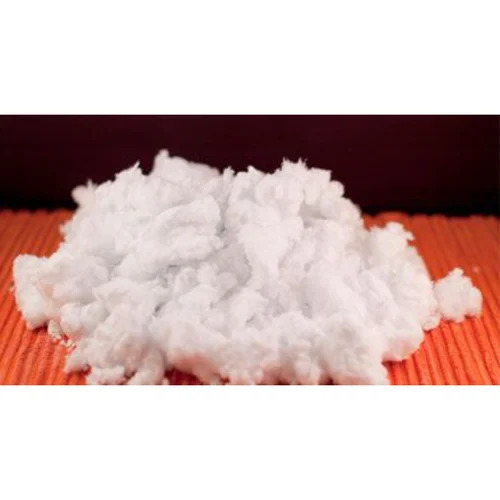
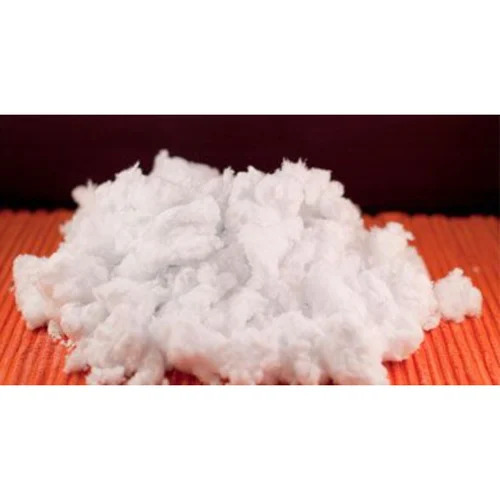
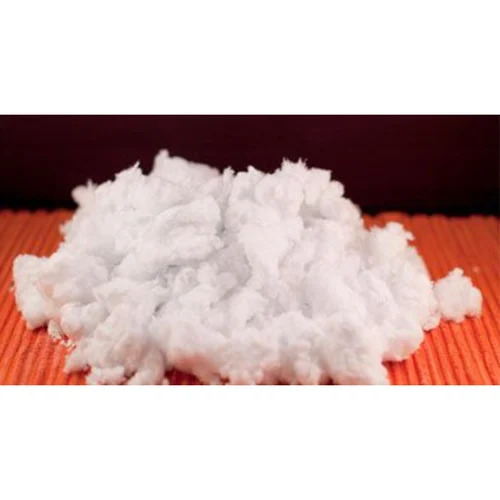
Our reputed company is broadly engaged in offering White Mineral Wool. This wool prevents a building from losing or gaining heat through its walls and roof. The offered wool is suitable for Packing or Insulation. White Mineral Wool is generally utilized as an insulation material in buildings and built structures.
Product details are totally depend on the customer requirement.
White Mineral Wool provides robust thermal and acoustic insulation, suitable for a range of structures such as residential buildings, industrial facilities, furnaces, and boilers. Its low thermal conductivity ensures energy efficiency and stable temperature control, while high sound absorption improves ambient comfort and reduces noise pollution.
Choose White Mineral Wool for its eco-friendly profile. The product is asbestos-free, non-combustible, and does not absorb moisture or produce odors. Comprised of inorganic fibres, it is insoluble in water and supports healthier, safer environments for occupants and workers alike.
FAQs of White Mineral Wool:
Q: How is White Mineral Wool installed in buildings and industrial plants?
A: White Mineral Wool can be installed as loose fill or in slab and roll forms, fitting various structural designs. For buildings and industrial plants, the material is placed between walls, floors, ceilings, or machinery using standard insulation techniques. Precise installation may vary depending on the specific application area and required insulation thickness.
Q: What are the main benefits of using White Mineral Wool in thermal and acoustic applications?
A: White Mineral Wool offers excellent thermal conductivity (0.0350.045 W/m.K), enabling efficient energy conservation. Its high sound absorption coefficient (NRC 0.901.00) reduces noise levels significantly. Additionally, it is non-combustible, moisture-resistant, asbestos-free, and environmentally safe, ensuring long-term durability and occupant safety.
Q: Where is White Mineral Wool typically used?
A: This insulation material is widely applied in buildings, industrial plants, furnaces, and boilers. It serves as an effective insulator in residential and commercial construction, as well as high-temperature industrial environments requiring superior heat and sound management.
Q: What is the process for sourcing White Mineral Wool from suppliers in India?
A: To acquire White Mineral Wool, contact reputable suppliers, traders, or wholesalers in India offering the material in HDPE bags or customized packaging. Provide details regarding the desired form (loose, slab, or roll), quantity, and application to receive tailored recommendations and quotations.
Q: How does White Mineral Wool contribute to eco-friendly construction?
A: White Mineral Wool is manufactured without asbestos and other hazardous substances. Its negligible moisture absorption, insolubility in water, and odorless properties minimize indoor pollution, making it ideal for sustainable construction. Additionally, its recyclable composition supports green building initiatives.
Q: When should I choose loose, slab, or roll forms of White Mineral Wool?
A: The choice between loose, slab, or roll forms depends on your specific insulation requirements and application area. Loose mineral wool suits irregular spaces, while slabs and rolls are ideal for uniform coverage of walls, roofs, or machinery. Consultation with suppliers can help determine the best format for your project needs.
Mineral wool is a versatile, fibrous inorganic insulation material made by spinning or drawing molten mineral, rock, slag, or glass materials. It is widely used for thermal insulation, soundproofing, and fire protection in residential and industrial buildings due to its high-temperature resistance and dense, fibrous structure.Key Details About Mineral Wool:Types: There are two main typesstone wool (made from volcanic rock or basalt) and slag wool (made from iron ore waste).Properties:Fire-Resistant: Non-combustible, able to withstand temperatures over 1,000C (\(>1,800{\circ}F\)).Sound Insulation: High density makes it excellent for reducing acoustic transfer.Thermal Performance: Provides high \(R\)-values (approximately 4 per inch).Moisture/Pest Resistant: Does not rot, retain moisture, or attract pests.Applications: Commonly used in wall cavities, attics, floors, industrial pipes, and as a hydroponic growing medium.Installation: Usually available as batts, rolls, or loose-fill. It is recommended to use masks, gloves, and eye protection during installation as it can cause temporary skin and lung irritation.Mineral wool is often considered a sustainable option because it is frequently made from industrial waste materials
 Send Inquiry


 Send Inquiry


 Send Inquiry